
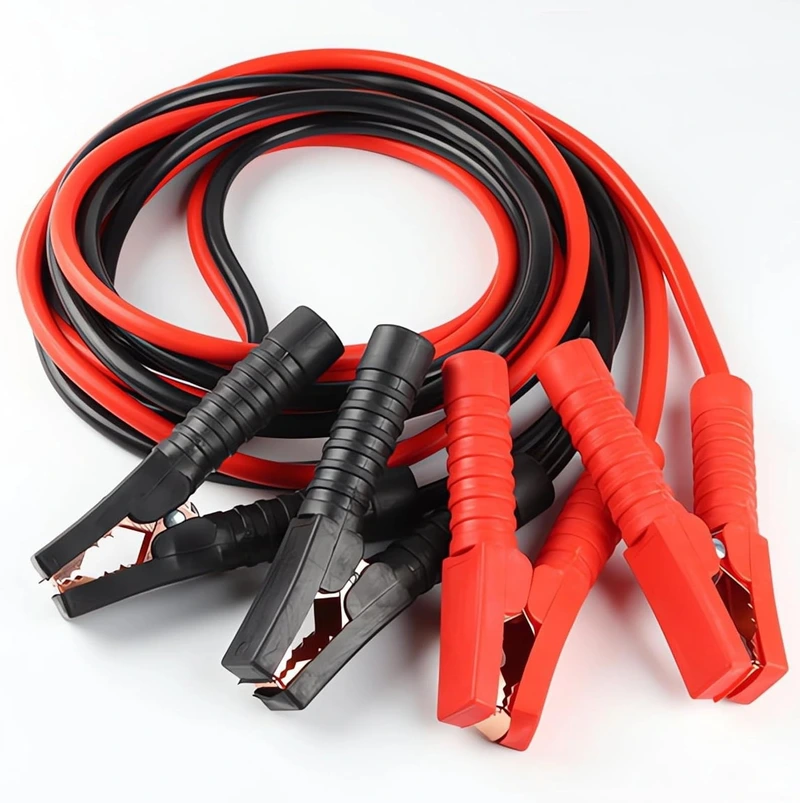
A dead battery always seems to happen at the worst possible time. Whether you left a light on or your battery is simply getting old, knowing how to safely use jumper cables can save you a lot of frustration.
Before You Start
Make sure both vehicles are parked close enough for the cables to reach, but do not let the vehicles touch. Turn both vehicles off and make sure both are in Park (or Neutral for a manual transmission) with the parking brakes set.
Check both batteries for visible damage, leaks, or cracks. Do not attempt to jump a damaged or leaking battery.
Connecting the Cables
Jumper cables typically have a red positive (+) clamp and a black negative (-) clamp.
Connect them in this order:
- Red to the dead battery's positive (+) terminal.
- Red to the good battery's positive (+) terminal.
- Black to the good battery's negative (-) terminal.
- Black to an unpainted metal surface on the vehicle with the dead battery, away from the battery itself.
Double-check that the clamps are secure and that they aren't touching each other or any moving parts.
Start the Vehicles
Start the vehicle with the good battery and let it run for a minute or two. Then try starting the vehicle with the dead battery. If it starts, let both vehicles run for several minutes before disconnecting the cables.
Disconnect in Reverse
Once the vehicle is running, remove the cables in the reverse order:
Black from the previously dead vehicle → Black from the good vehicle → Red from the good vehicle → Red from the previously dead vehicle.
Keep the clamps from touching each other while they're connected.
One Last Tip
If your vehicle needs frequent jumps, the battery may be reaching the end of its life—or there could be another issue with the charging system. A jump-start can get you moving, but it doesn't necessarily fix the underlying problem.
Always check your owner's manual before jump-starting your vehicle, since some newer vehicles have specific jump-start procedures or designated connection points.
A few minutes of preparation can make a dead-battery situation much less stressful—and knowing the proper steps can help you get safely back on the road.


