
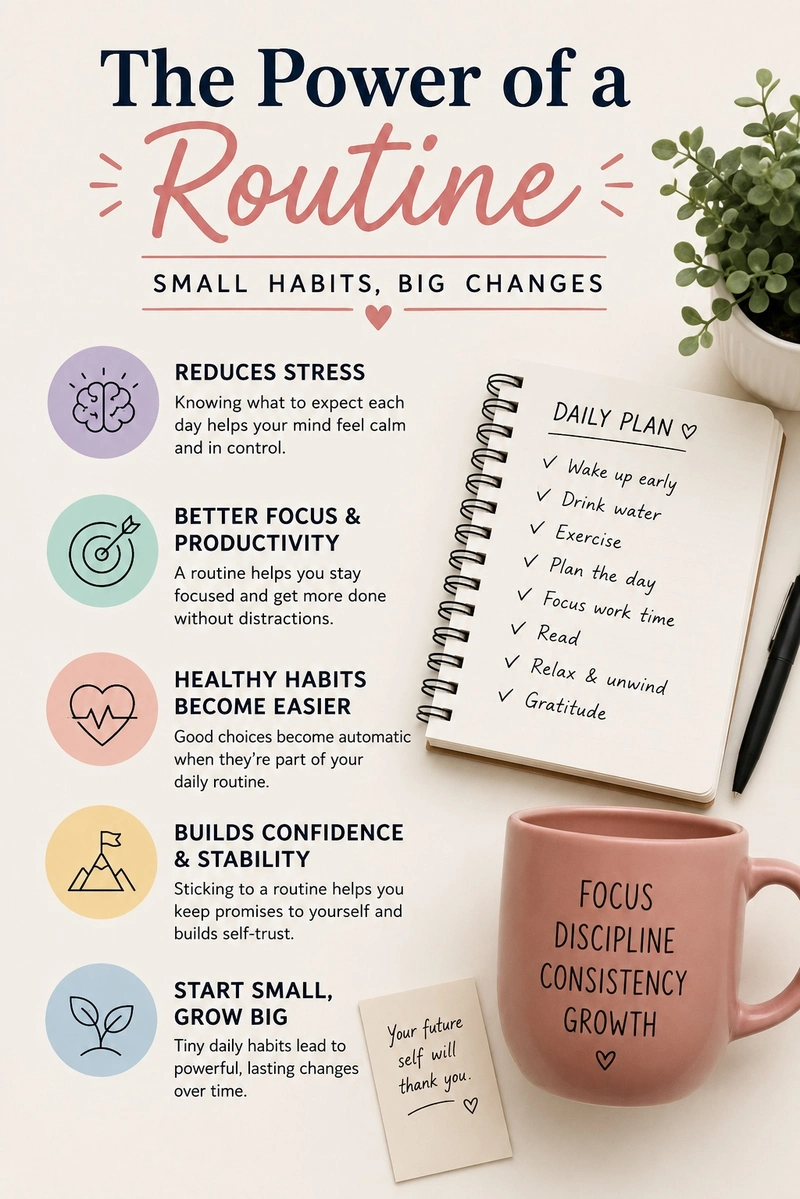
In a world full of distractions, stress, and nonstop responsibilities, having a daily routine can feel like a superpower. A routine is more than just doing the same thing every day — it’s a structure that helps bring balance, clarity, and purpose into your life.
Whether it’s a morning workout, a nightly reading habit, or simply waking up at the same time every day, routines help create consistency. And consistency is where real growth happens.
Routines Reduce Stress
One of the biggest benefits of having a routine is reducing mental overload. When you already know what your day looks like, you spend less time worrying about what to do next. This can help lower stress and make life feel more manageable.
Simple habits like preparing for the next day the night before or scheduling time for breaks can make a huge difference in your mindset.
Better Focus and Productivity
People with routines often get more done because they spend less time procrastinating. A routine trains your brain to stay focused and organized. Instead of relying on motivation every day, your habits begin to work automatically.
Even small routines can increase productivity:
- Making your bed in the morning
- Planning daily goals
- Setting a consistent work schedule
- Limiting distractions during certain hours
These habits may seem small, but over time they build discipline and momentum.
Healthy Habits Become Easier
Routines also make healthy choices easier to maintain. Exercising regularly, drinking more water, eating balanced meals, and getting enough sleep become more natural when they’re part of your schedule.
Without a routine, it’s easy to push healthy habits aside. But when those habits become part of your normal day, they require less effort and thought.
Builds Confidence and Stability
There’s something powerful about keeping promises to yourself. Following a routine creates a sense of accomplishment and control. It reminds you that even during chaotic times, you can still stay grounded.
A routine doesn’t have to be perfect. Life changes, schedules shift, and unexpected things happen. The goal isn’t perfection — it’s consistency.
Start Small
You don’t need a complicated schedule to benefit from a routine. Start with one or two habits:
- Wake up at the same time each day
- Spend 10 minutes planning your day
- Create a relaxing nighttime routine
- Set aside time for yourself
Over time, those small habits can lead to major improvements in your mental health, productivity, and overall happiness.
Final Thoughts
Having a routine helps bring order to the chaos of everyday life. It can improve your focus, reduce stress, build confidence, and help you stay committed to your goals. The small things you do consistently often create the biggest changes over time.
Your routine doesn’t have to look like anyone else’s — it just has to work for you.


