
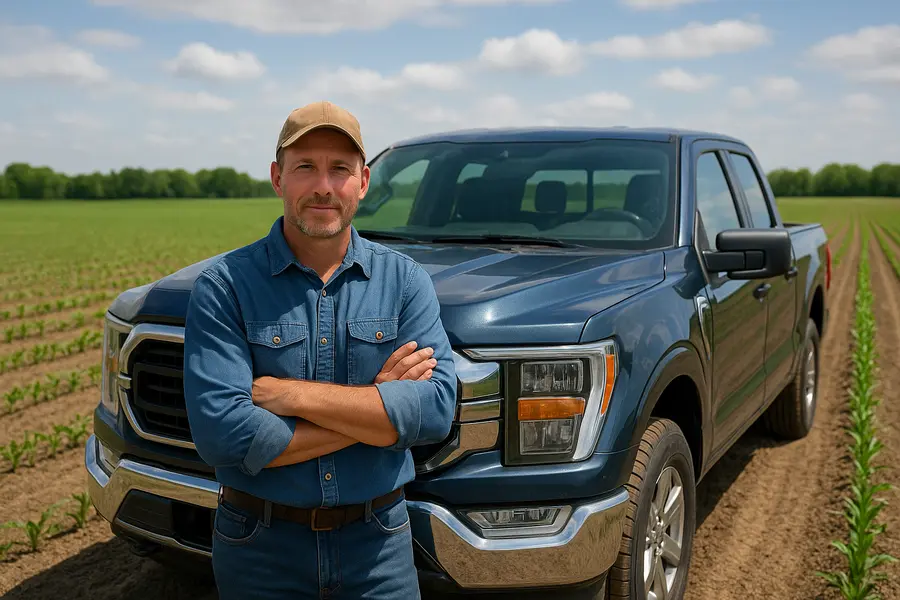
Trucks are the backbone of a row crop farm, serving as mobile workshops, personnel carriers, and the primary means of moving seed, chemicals, and trailers during the long arc from spring planting to fall harvest. Over the course of a season a well-configured pickup or medium-duty truck shifts roles repeatedly, and preparing the vehicle to handle those demands pays dividends in efficiency and uptime.
Pre-season preparation centers on reliability. Farmers inspect brakes, tires, suspension, cooling systems, batteries, and lighting before fields turn muddy. Heavy loads and long days mean brake pads and rotors are inspected early, while a strong alternator and battery protect telematics and corn-planter monitors. Installing bed toolboxes, heavy-duty tie-downs, and upgraded lighting happens now so the truck is ready when planting starts.
Planting season pushes trucks into shuttle, service, and support roles. Trucks haul seed totes and bulk fertilizer to planters, tow air carts and trailers across fields, and transport crews between fields and shops. Payload capacity and bed organization matter: optimizing payload prevents overloading the rear axle and keeps tow ratings intact. Crew cabs provide comfort and allow safe transport of workers. Four-wheel drive and all-terrain tires help with traction on wet headlands and field lanes.
Mid-season work includes frequent trips for field scouting, sprayer support, and on-the-fly repairs. Light and auxiliary power are often added to keep sprayer booms and headlands visible at dawn or dusk. Farmers rely on trucks with robust electrical capacity to run compressors, welders, and battery chargers in the field. Fuel economy is a consideration, but robustness and torque—especially from diesel engines—are prioritized where heavy towing and long idling are routine.
Spraying and crop protection require careful load and chemical handling. Trucks used to haul spray tanks and nurse trailers must have corrosion-resistant steps and secured mounts. Class-leading hitches with weight-distributing and surge or electric-over-hydraulic brake controllers are essential for safe towing of loaded sprayers. Proper ventilation and secure storage for pesticides, along with spill kits, reduce risk.
Harvest is the season’s stress test. Trucks shuttle grain carts, haul trailers to storage, and ferry crews through long days. Payload-versus-towing trade-offs become pronounced: carrying heavy grain loads benefits from reinforced suspensions and high payload ratings, while hauling large grain trailers requires heavy-duty chassis and robust cooling systems. Many farms rely on a mix of heavy-duty pickups and medium-duty trucks to separate high-payload bulk hauling from lighter field support tasks.
Maintenance during harvest shifts to rapid-response. On-farm telematics and fleet tracking help dispatch the closest truck for breakdowns, reducing downtime. Tire pressure monitoring, quick-change tools, and mobile repair kits are standard. Trucks used year after year receive scheduled service at shorter intervals to account for the season’s intensity.
Post-harvest and winter are for restoration and upgrades. Deep cleaning of beds and undercarriages removes corrosive chaff and fertilizer. Fleet managers evaluate wear to plan replacements and resale timing. Winter prep—installing snowplows, adding winter tires, and treating fuel systems—keeps trucks productive during soil sampling, tile work, and off-season hauling.
Choosing the right truck mix is a strategic decision. Modern row crop operations balance heavy-duty pickups for towing and medium-duty trucks for bulk hauling, prioritizing engine torque, cooling capacity, and frame strength. Upfitting with hitches, electric brakes, toolboxes, and auxiliary fuel tanks tailors vehicles to seasonal needs. Telemetry and fleet management improve utilization, track maintenance, and influence replacement cycles.
Across the season the common thread is adaptability. Trucks that are well-maintained, purpose-upfitted, and matched to task loads keep operations moving, reduce costly downtime, and protect valuable equipment. For row crop farmers, the right truck setup is as important as seed and timing—it's a mobile partner through every planting and harvest day.
If you have any questions or would like help exploring your options, I’d be happy to help. Feel free to reach out anytime for more information or to take the next step when you’re ready.
Alex White
(870) 514-9952
Homer Skelton Ford


